
Transfer Pricing Masterclass

21-22 January 2026 I PwC Academy Riyadh
28-29 January 2026 I PwC Academy Dubai
Transfer pricing plays a critical role in how organisations manage risk, compliance, and stakeholder expectations. This masterclass equips in-house tax and finance professionals with a practical understanding of transfer pricing as it operates in real business environments.
Focusing on real-life challenges rather than theory, the programme uses hands-on scenarios and discussion to help participants make better transfer pricing decisions, engage effectively with internal stakeholders and external advisors, and clearly determine what can be managed in-house versus outsourced.
For those that have attended an earlier session, this version is updated by structuring the learnings in a way that identifies the issue that in-house tax practitioners face and then moves to what can be done to address the issue.
Day 1 focusses on running a smoother transfer pricing compliance process, emphasising robust policy design, accurate data, and cross-functional alignment to reduce inefficiencies such as post-year-end adjustments. Day 2 explores transfer pricing insights for common business models and evolving supply chains, alongside audit readiness and dispute resolution strategies in an increasingly complex tax and geopolitical landscape.
Upon completion of this masterclass, participants will earn 6 CPD credit hours and receive a certificate of completion.
Agenda
Two full day classroom training sessions facilitated by Eric Vroemen an experienced ex-PwC TP partner who now works as a Special Advisor to PwC ME and a tutor for the PwC Academy, supported by local specialists.
Day 1 - How to run your transfer pricing compliance process smoother
Session 1 - Setting the scene
- The TP life cycle and where documentation fits in.
- The relevance of TP for tax purposes, audit and corporate reputation (i.e. the cost of getting it wrong)
- Factors that determine a company to be in control of their TP position.
- Determining the comfort level of the TP position against the risk tolerance level of the company.
Session 2 - The (changing) reference framework
- The current and past prevailing international principles for allocating profit to activities (enabling you to recognise whether your policies are outdated)
- The prevailing reference frameworks and where they -sometimes- differ (obtain an understanding of the different interpretations by various tax authorities)
Session 3 - TP design
- The TP methods and the importance of choosing the appropriate method
- How to choose the appropriate method (functional analysis and common business models, i.e. manufacturing, distribution, procurement)
- How functional price testing works
- Benchmarking analysis explained
Session 4a - TP Implementation
- How transactional price setting works (for service providers, distributor and manufacturer activities)
- Year-end adjustments, what risk they bring and how to mitigate these risks
- The potential of technology in setting and adjusting your TP’s
Session 4b - TP Implementation
- Case study on how to align the relevant stakeholders within a company to mitigate the effects of post-year-end TP adjustments and as a result lower the tax at risk, run a smoother compliance process, have an accurate reflection of the TP position in the financial accounts, and reduce the key-person-risk.
Day 2 - Transfer pricing for common business models
Session 1 - Setting the scene
- Choosing the location of your (regional) head quarter
- ○ The main -tax- features of a holding regime (tax rate, participation exemption, domestic WHTs, treaty network and -advanced- certainty) and how they can be affected by TP.
- ○ UAE – CIT regime (incl. FZ – substance requirements)
- ○ KSA – CIT regime (incl RHQ – substance requirements)
Session 2 - The remuneration of the HQ functions
- Low and high value adding services
- Procurement companies (who gets the synergy benefit and how sustainable is the centralisation of profits of high value add services)
Session 3 - The remuneration of the Principal functions
- The Principal model explained
- Implementing a Principal office (PE issues, exit goodwill)
- The contracting Principal (local content, re-invoicing companies, title of transactions)
- the R&D Principal
Session 4 - The remuneration of the treasury function
- Intercompany loans (shareholder loan, loan pricing, financial conduit companies),
- cash pooling arrangements (the effect of group rating and how this impacts the remuneration of the cash pool leader)
Session 5 - Related parties
- OECD criteria / Domestic rules
- Joint ventures (why are they considered related parties)
- Government owned entities (UAE and KSA rules)
Session 6 - Audit management and dispute resolution
- Common observed audit risks
- The instruments to avoid double taxation and how to choose the right instrument
- Tax audit risk management i.e. communication protocol, sharing of documents, statute of limitations, burden of proof, penalties, etc.




Contact us
-

Steven Cawdron
Middle East Transfer Pricing Leader at PwC Middle East -

Eric Vroemen
Senior Executive Advisor at PwC Middle East -

Zachary Noteman
Partner - Tax & Legal Services at PwC Middle East -

Zeeshan Humayun
Partner - Tax & Legal Services at PwC Middle East -

Ahmet Celiktas
Director - Tax & Legal Services at PwC Middle East -

Nicholas Leak
Director - Tax & Legal Services at PwC Middle East -

Jaikishan Kothari
Director - Tax & Legal Services at PwC Middle East -

Himanshu Daswani
Senior Manager - Tax & Legal Services at PwC Middle East -

Parsa Pourankooh
Senior Manager - Tax & Legal Services at PwC Middle East -

Rohit Gupta
Director - Tax & Legal Services at PwC Middle East -

Roshan Lunavat
Director - Tax & Legal Services at PwC Middle East -

Sevgi Ozdemir
Director - Tax & Legal Services at PwC Middle East -
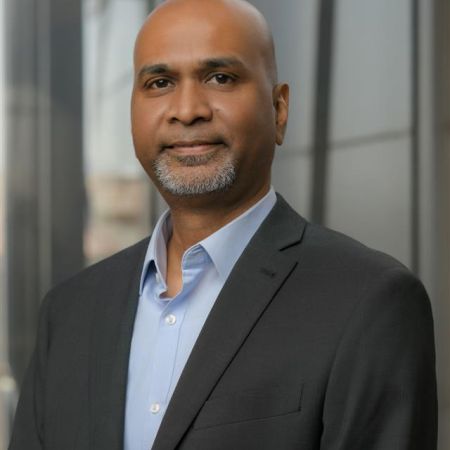
Joy Mukherjee
Director – Tax & Legal Services at PwC Middle East -

Nelson Idemudia
Director – Tax & Legal Services at PwC Middle East -

Manas Arora
Director Tax & Legal Services at PwC Middle East -

Ghaida Hussein
Senior Manager – Tax & Legal Services at PwC Middle East -

Maciek Bonk
Senior Manager – Tax & Legal Services at PwC Middle East