
ISO/IEC 42001 Lead Implementer


What will you learn
01 Interpret ISO/IEC 42001 Understand the requirements and implementation implications of an Artificial Intelligence Management System. | 02 Plan the AIMS Define scope, governance, leadership responsibilities and a practical implementation roadmap. | |
03 Manage AI risks and impacts Assess risks, opportunities and stakeholder impacts and connect them to suitable controls. | 04 Operationalise responsible AI Translate policies into roles, processes, lifecycle controls and documented information. | |
05 Monitor and improve Establish objectives, metrics, internal audit, management review and continual-improvement mechanisms. | 06 Prepare for certification Assess readiness for third-party certification and prepare for the PECB Lead Implementer examination. |
Who should attend?
- AI governance and responsible AI professionals
- AI programme and transformation leaders
- Risk, compliance and governance professionals
- Information-security and technology leaders
- AI implementation teams
- Management-system professionals
- Internal control and assurance professionals
- Consultants supporting AI-governance programmes
- Professionals responsible for ISO/IEC 42001 implementation
- Chief AI, Data, Digital and Technology Office teams
- Professionals preparing organisations for AIMS certification
- Leaders responsible for establishing enterprise AI policies and controls
Pre-requisites
- Fundamental understanding of AI concepts recommended
- General understanding of management-system principles beneficial
- Familiarity with governance, risk or compliance useful
- Previous ISO management-system exposure beneficial but not mandatory
- No professional or project experience required for the Provisional Implementer credential
- Full Lead Implementer credential requires five years of professional experience, including two years in AI
- Full Lead Implementer credential also requires at least 300 hours of AIMS project activity
- Laptop required for implementation exercises
Delivery format
- Hybrid – face-to-face + live stream
- Instructor-led PECB-aligned programme
- Implementation workshops
- ISO/IEC 42001 requirement interpretation
- AIMS design exercises
- Risk and governance scenarios
- Individual and group activities
- Case-based implementation exercises
- Certification preparation
Explore the twenty modules designed to build practical capability for interpreting ISO/IEC 42001, designing and implementing an Artificial Intelligence Management System, managing AI risks and controls, and preparing for PECB Lead Implementer certification.
Module 1: Introduction to ISO/IEC 42001 & AIMS
What you'll explore:
- Understanding the purpose of ISO/IEC 42001
- Defining an Artificial Intelligence Management System
- Understanding the structure of the standard
- Exploring responsible AI management principles
- Connecting AIMS to enterprise AI governance
Module 2: AIMS Principles, Concepts & Requirements
What you'll explore:
- Understanding management-system concepts
- Interpreting ISO/IEC 42001 requirements
- Understanding applicability and exclusions
- Connecting requirements with organisational practices
- Understanding documentation expectations
Module 3: Organisational Context & Interested Parties
What you'll explore:
- Identifying internal and external organisational issues
- Determining relevant interested parties
- Understanding stakeholder expectations
- Identifying legal and regulatory considerations
- Connecting organisational context to AIMS design
Module 4: Initiating the AIMS Implementation
What you'll explore:
- Establishing the implementation project
- Defining implementation responsibilities
- Conducting an initial gap analysis
- Establishing implementation milestones
- Building the AIMS implementation roadmap
Module 5: Defining the AIMS Scope
What you'll explore:
- Establishing organisational boundaries
- Identifying relevant AI systems
- Defining business and technology interfaces
- Determining applicable processes
- Documenting the AIMS scope
Module 6: Leadership, AI Policy & Accountability
What you'll explore:
- Establishing executive commitment
- Developing the AI policy
- Assigning responsibilities and authorities
- Defining governance and oversight structures
- Building organisational accountability
Module 7: Planning the AIMS Implementation
What you'll explore:
- Translating requirements into implementation activities
- Identifying resources and dependencies
- Sequencing implementation work
- Defining responsibilities and ownership
- Establishing implementation monitoring
Module 8: AI Risk & Opportunity Management
What you'll explore:
- Identifying AI-related risks
- Assessing likelihood and impact
- Identifying AI-related opportunities
- Defining risk-treatment measures
- Connecting risks with AIMS controls
Module 9: AI Impact Assessment
What you'll explore:
- Understanding impacts of AI systems
- Identifying affected stakeholders
- Assessing potential negative consequences
- Considering fairness, transparency and accountability
- Integrating impact assessment into AI decision-making
Module 10: AI Objectives & Performance Measures
What you'll explore:
- Establishing measurable AI objectives
- Connecting objectives to organisational priorities
- Defining performance indicators
- Assigning ownership
- Establishing monitoring mechanisms
Module 11: Support, Resources & Competence
What you'll explore:
- Identifying required resources
- Defining AI competence requirements
- Developing awareness programmes
- Establishing communication processes
- Ensuring availability of appropriate organisational support
Module 12: Documented Information & AIMS Controls
What you'll explore:
- Identifying required documented information
- Establishing document-control processes
- Designing AI management procedures
- Maintaining evidence of implementation
- Controlling changes to AIMS documentation
Module 13: Operationalising the AIMS
What you'll explore:
- Translating policies into operating processes
- Embedding controls in AI workflows
- Establishing operational responsibilities
- Managing planned changes
- Maintaining evidence of AIMS operation
Module 14: AI System Lifecycle Governance
What you'll explore:
- Governing AI system acquisition and development
- Managing AI throughout its lifecycle
- Establishing responsible-use requirements
- Controlling third-party AI services
- Managing changes to AI systems
Module 15: Data, Transparency & Responsible AI Controls
What you'll explore:
- Establishing data-governance expectations
- Supporting transparency and explainability
- Establishing appropriate human oversight
- Managing responsible-use controls
- Connecting operational controls to identified AI risks
Module 16: Third Parties, Suppliers & AI Dependencies
What you'll explore:
- Identifying external AI dependencies
- Assessing supplier risks
- Establishing contractual and governance expectations
- Monitoring external service providers
- Maintaining accountability for outsourced AI capabilities
Module 17: Monitoring & Measuring AIMS Performance
What you'll explore:
- Establishing monitoring requirements
- Defining metrics and indicators
- Analysing AIMS performance
- Evaluating effectiveness of controls
- Reporting results to management
Module 18: Internal Audit & Management Review
What you'll explore:
- Planning AIMS internal audits
- Evaluating conformity and effectiveness
- Preparing management-review inputs
- Reviewing AIMS performance
- Identifying areas for improvement
Module 19: Continual Improvement & Certification Readiness
What you'll explore:
- Managing nonconformities
- Implementing corrective actions
- Driving continual improvement
- Conducting certification-readiness assessment
- Preparing for a third-party AIMS certification audit
Module 20: PECB ISO/IEC 42001 Lead Implementer Examination
What you'll explore:
- Final examination briefing
- Review of the six competency domains
- Completion of the PECB Lead Implementer examination
- Understanding the credential-application process
- Planning progression from Provisional Implementer to Lead Implementer
PRACTICAL TOOLS & RESOURCES
You will walk away with
Practical implementation resources to support ISO/IEC 42001 AIMS design, deployment, certification readiness and ongoing management.
| ✓ | Official PECB learning materials Where delivered under the licensed programme, including more than 400 pages of information, examples, exercises and quizzes. |
01 AIMS implementation roadmap template | 02 ISO/IEC 42001 requirements mapping tool |
03 AIMS scope and context template | 04 AI policy template |
05 AI roles and responsibilities matrix | 06 AI risk and opportunity register |
07 AI objectives and KPI template | 08 AI controls implementation checklist |
09 Documented-information register | 10 Internal-audit readiness checklist |
11 Management-review template | 12 Corrective-action tracker |
13 Certification-audit readiness assessment | 14 Certification-domain study guide |
15 31 CPD credits upon completion of the official PECB course | 16 One free exam retake for eligible participants within 12 months |
Practical resources you can keep using beyond the programme to support AIMS implementation and certification readiness.
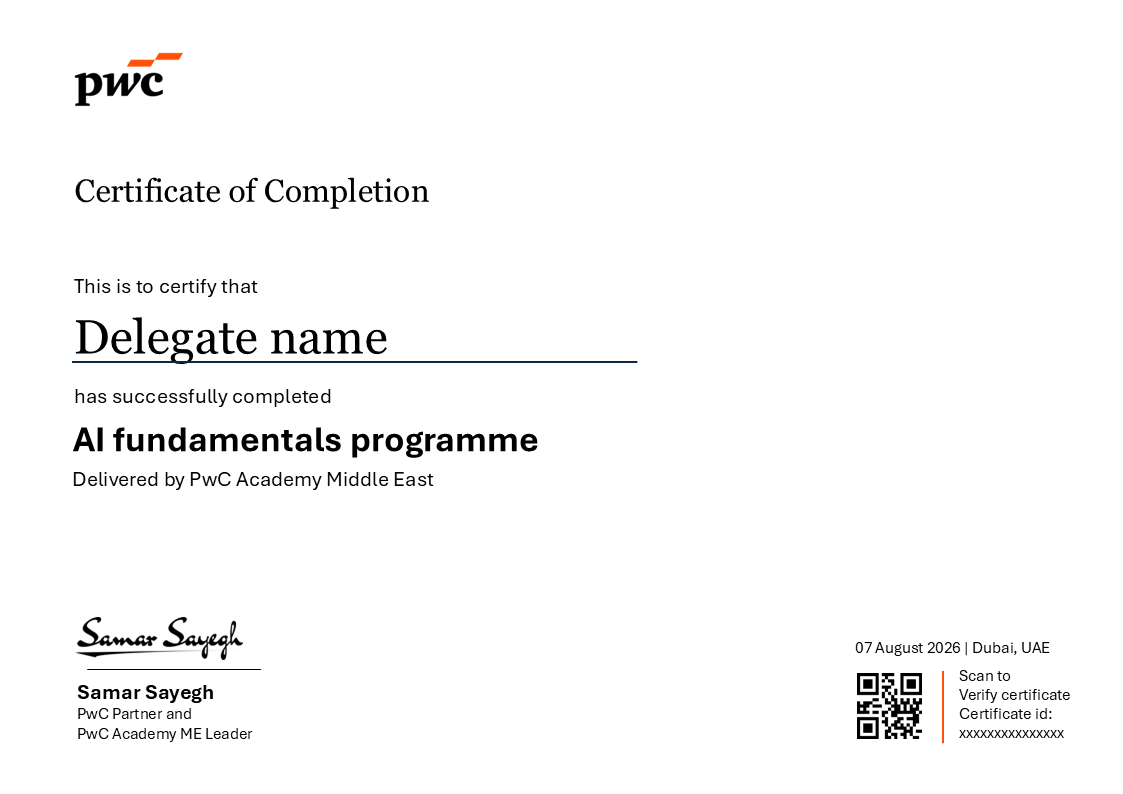
Certificate details
CERTIFICATION BODY
PECB
CREDENTIAL PATHWAY
PECB ISO/IEC 42001 Lead Implementer
- Six examination competency domains
- Exam duration: 3 hours according to the current PECB brochure
- Provisional Implementer: no experience or project-hour requirement
- Implementer: two years' professional experience, including at least one year in AI, plus 200 AIMS project hours
- Lead Implementer: five years' professional experience, including at least two years in AI, plus 300 AIMS project hours
- Senior Lead Implementer: ten years' professional experience, including at least seven years in AI, plus 1,000 project hours
- Candidates must sign the PECB Code of Ethics
- Official programme provides 31 CPD credits
- One free exam retake is available within 12 months for eligible training participants
Schedule
Programme details to be announced soon; watch this space.
Connect with our team
-

-

Dhisha Viswanathan
Programme Advisor - Digital Programme